The most critical weeks of the season (sowing, grain fill, harvest) too often coincide with heavy cloud. On those days an optical satellite is blind. Radar sees. Here’s how all-weather imaging fills the cloud gaps and gives a farm a continuous picture of the field exactly where ordinary monitoring falls silent.
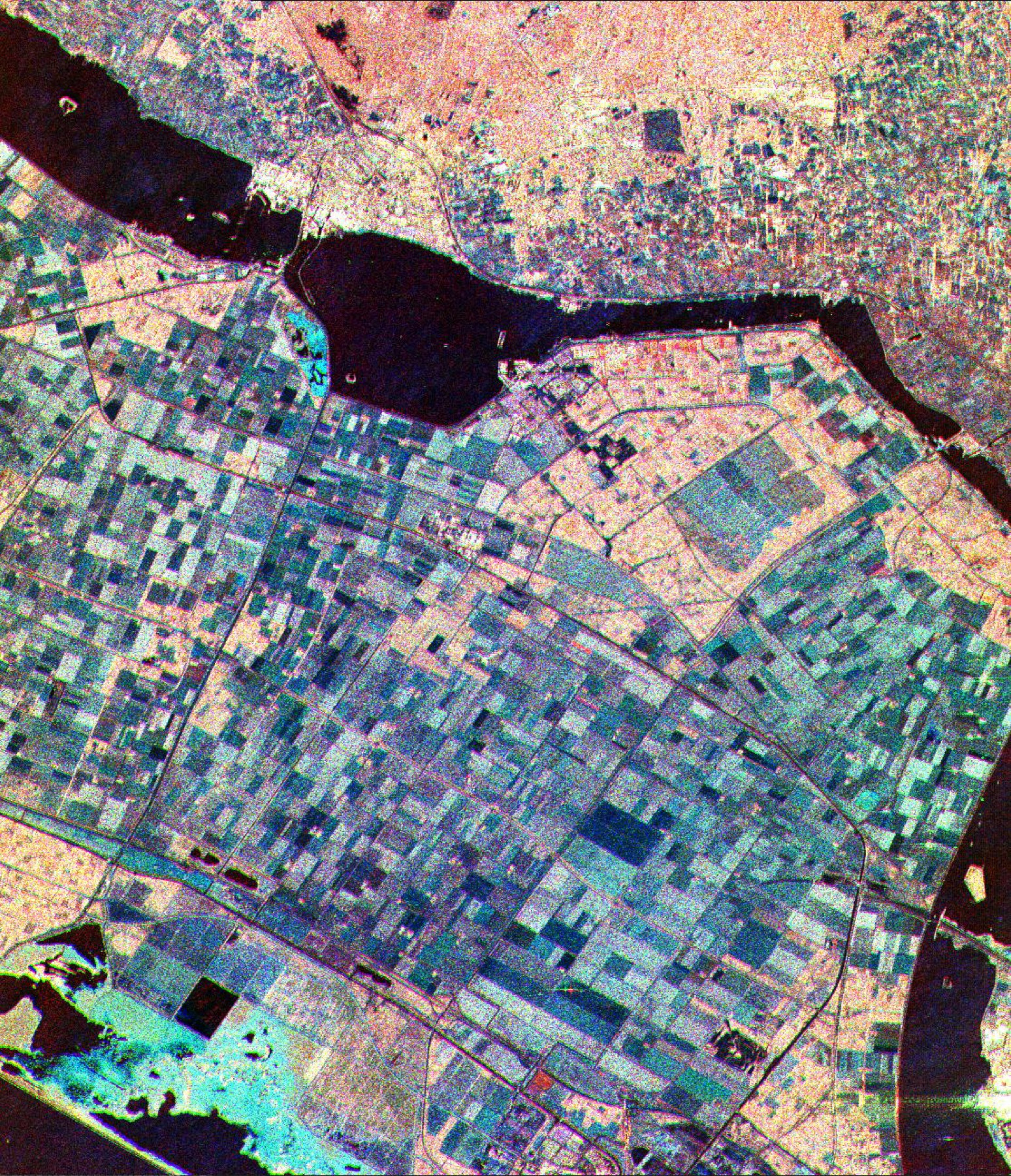
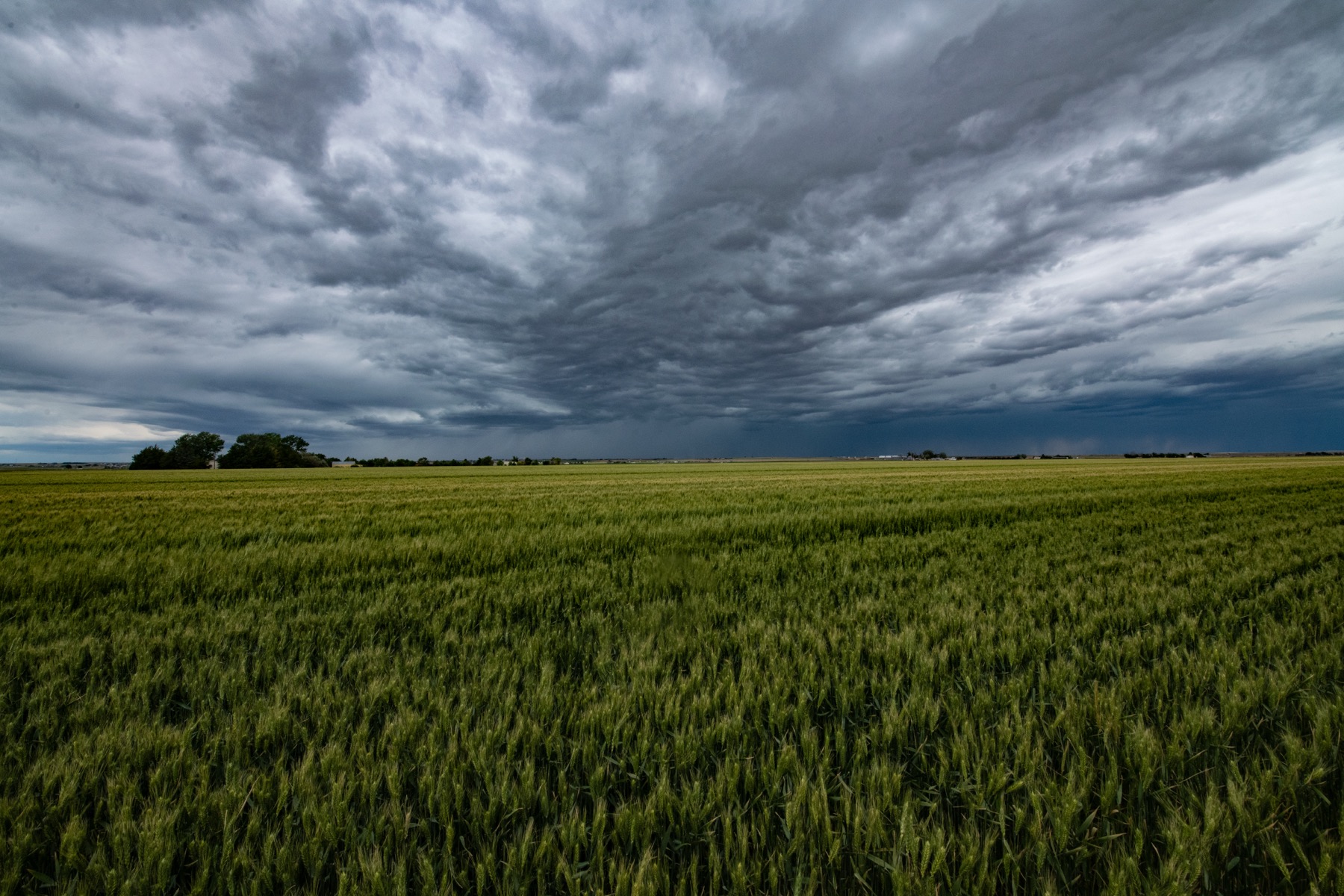
Any monitoring that relies on reflected sunlight has a fundamental limit: it needs a clear sky between the satellite and the field. Multispectral and hyperspectral read the light reflected by the plant, and a cloud becomes an opaque curtain for them. One overcast day means a gap in the data. A week of low cloud at the height of grain fill leaves a farm without a fresh picture exactly when it’s needed most. In southern Russia, where spring-summer cloud often arrives precisely during the critical stages, this isn’t a theoretical problem but a seasonal one.
Radar solves it in a fundamentally different way.
Why radar sees what’s hidden
A radar satellite doesn’t wait for the sun and doesn’t read reflected light. It sends its own radio pulse to the ground and listens for what comes back. The wavelength of that pulse is such that clouds are transparent to it: it passes through cloud, fog and rain as if they weren’t there. And because the instrument doesn’t depend on sunlight, it works equally by day and by night.
This completely changes the logic of observation. Optical answers the question “what colour is the field and how much chlorophyll is in it”. Radar answers a different one: “what’s the field’s structure and how much moisture is in it”. The returned signal depends on two things. First, on the geometry of the surface: how rough it is, whether stubble is standing, whether the stand has closed. Second, on moisture, because water strongly changes how a surface reflects a radio wave. So radar senses what’s inaccessible to optical in principle: waterlogging and flooding, surface condition after sowing, the density and structure of the stand, and the dynamics of moisture in the top layer.
All-weather as continuity, not as a trick
Radar’s main value isn’t the exoticism of the method but the fact that it leaves no holes in observation.
Picture a field’s seasonal monitoring chart. With optical it’s ragged: a clear image, then five overcast days of emptiness, then a break again. And the more important the stage, the more painful the gap. Radar runs as a steady line over that chart, because it doesn’t depend on whether there’s cloud over the field. As a result, the field’s history becomes continuous: you see not only isolated clear moments but what happened between them.
Cloud doesn’t take a break during the most critical weeks of the season. On the contrary, it arrives precisely then. Radar is needed not instead of optical, but for exactly those days when optical is silent.
So it’s more accurate to say not “radar versus optical” but “radar plus optical”. We use them together: multispectral and hyperspectral give the plant’s biochemistry and physiology (greenness, nitrogen, pigments), while radar provides continuity and adds what only it can see: moisture and structure. When a cloud closes the field to optical, radar keeps the watch; when the sky clears, optical returns and refines the detail. A cloud gap stops being a hole in the data and becomes just an episode covered by another source.
What radar reads in a field
A few practical cases where an all-weather view is decisive:
- Sowing and emergence under cloud. A wet spring often closes the sky right in the sowing window. Radar lets you see the field surface and the progress of work without waiting for a clear day.
- Waterlogging and flooding. Water changes the radar signal sharply, so pooled moisture and flooded low spots are seen quickly, before they affect the plants.
- Harvest against the weather. In the harvest rush every clear day counts, and cloud hides the field from optical. Radar helps track the state of blocks and the progress of harvest regardless of the sky.
- Verifying that work was done. A change in surface structure (whether sowing happened, whether harvest was carried out) is captured by radar even where optical can’t get a clean frame for weeks.
An honest frame
Radar isn’t a universal answer to every question. It doesn’t measure chlorophyll and doesn’t read the “red edge”: the plant’s biochemistry needs the optical spectrum. Its signal is harder to interpret, and behind every map lies work to clean and make sense of the data. We don’t pass radar off as something it isn’t. Its strength is in one thing, but a critically important one: it doesn’t fall silent. It keeps the field under watch when any light-dependent method has to wait for the weather.
That’s exactly why all-weather imaging isn’t a backup for cloudy days but a load-bearing element of continuous monitoring. It turns observation from a set of lucky clear frames into an unbroken line you can lean on when planning.
What it gives the farm
- Continuity instead of gaps. A field history with no holes, even during weeks of cloud: you can rely on the data at any moment of the season.
- Observation in critical stages. Sowing, grain fill and harvest stay under control precisely when they’re most often hidden by weather.
- An early moisture signal. Waterlogging and flooding are seen quickly, before the damage becomes irreversible.
- Objective proof of work. Whether sowing happened, whether harvest was done: all captured regardless of cloud and without a trip to the field.
- Resilience of the whole monitoring system. Radar plus optical insure each other: weather no longer switches observation off entirely.
Clouds close the field to the eye, but not to radar. And while the sky decides whether to give a break, the farm keeps seeing its land.